
Search "do podcasts make money" and most answers are written for creators: sell ads, find sponsors, grow a huge audience. That advice fits a media business. It doesn't fit a financial advisor, a physician, or a founder who started a show to win more clients.
Below, we answer the question from a business owner's point of view, then show you how to measure whether your podcast is paying off.
Do podcasts make money?
Yes, but most podcasts earn very little from advertising. The money is there: US podcast ad revenue reached $2.9 billion in 2025, up 17.6% from 2024, according to the IAB Internet Advertising Revenue Report prepared by PwC. Most of it goes to shows with large audiences.
The typical podcast is much smaller. In Buzzsprout's October 2026 platform data, half of all episodes got 27 or fewer downloads in their first week. Since sponsors pay for reach, a show that size won't earn much from ads.
Business podcasts make money another way. If one client is worth $5,000 or more to you, a handful of new clients a year can cover the cost of a fully produced show. So the better question isn't whether podcasts make money. It's whether your podcast makes money for your business.
How do podcasts make money?
There are five main sources of revenue for podcasters. The first three depend on how big your audience is. The last two depend on who's in it.
Advertising and sponsorships
Brands pay to reach your audience through host-read ads, pre-produced spots, or a sponsor for a whole season. Rates are usually tied to downloads, so this works best for shows that reach thousands of people per episode.
Listener support and paid subscriptions
Some shows charge for bonus episodes, early access, or an ad-free feed, or collect support through a membership platform. This takes a loyal, sizable audience, and it turns your show into a product you have to keep feeding.
Affiliate income
Hosts earn a commission when listeners buy through their link or discount code. It can add up for niche shows with a buying audience, but each sale pays only a small amount.
New clients and bigger deals
This is where a business owner's podcast earns its keep. A prospect watches a few episodes, gets to know how you think, and books a call already trusting you. Guests become referral partners or clients. Your team sends an episode that answers the objection a prospect raised on the last call.
The research backs this up. In the 2026 Edelman-LinkedIn B2B Thought Leadership Impact Report, 76% of B2B decision-makers said thought leadership shared within their buying group helped them judge whether a vendor understood their needs, and 52% said it helped them choose a vendor. The reverse is also true: 59% of final decision-makers said poor or missing thought leadership helped knock a vendor out of the running. That's the real job of a thought leadership podcast.
Content that replaces other marketing spend
One recorded hour can become a full video episode, several short clips, a blog post, and a newsletter. That's content you'd otherwise pay a writer, editor, or agency to produce. Here's how to turn one episode into a month of content.
How many podcast downloads is good?
About 28 downloads per episode in the first week puts a show in the top half of podcasts. Buzzsprout publishes monthly benchmarks based on first-week downloads. Here's where the thresholds sat in October 2026, across 111,713 active podcasts on its platform:
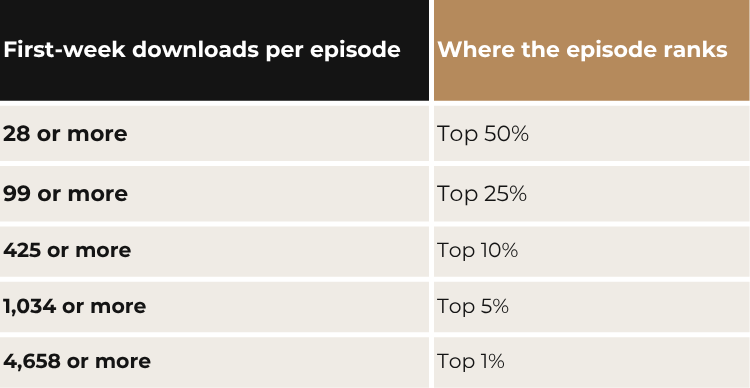
These numbers leave out an important group: people who watch. Downloads are counted on a hosting platform, so YouTube views don't show up in them. For a business podcast, who's watching matters more than how many. An audience of 200 decision-makers in your niche is worth more than 20,000 casual listeners who will never buy from you. And your buyers are likely already tuning in.
How do you measure podcast ROI?
Podcast ROI compares the revenue your show brings in with what it costs to make. You can work it out in four steps.
Step 1: Pick one business goal
Decide what the podcast is for before you record. New clients, larger deals, referral partnerships, and speaking invitations are all valid goals, but each one is tracked differently. Choose the one that matters most this year.
Step 2: Add up the full cost
Count everything: studio time, editing, clips, show notes, and the hours you spend preparing and promoting each episode. If you're still pricing it out, our guide to what a video podcast costs breaks down each line item.
Step 3: Track the revenue your podcast brings in
Some clients will find you through the show. Others will already be talking to you, then sign after watching a few episodes. Count both, using a few simple habits:
Intake form: add "How did you hear about us?" with the podcast as an option.
Tracked links: put a unique link or landing page in your show notes and episode descriptions.
Discovery calls: ask new leads which episodes they've watched, and note it in your CRM.
Guests: keep a list of every guest and record any referral or project that comes from them.
Step 4: Run the formula
Podcast ROI = (podcast revenue - podcast cost) ÷ podcast cost × 100.
Count each new client at their first-year value, not just the first invoice, so a long-term client counts at what they're really worth.
What does podcast ROI look like for a business owner?
Here's a simple example. Say you book the Authority Launch at Venice Podcast Studio: 12 fully produced video episodes over 90 days for $12,900. That works out to $1,075 per episode, and each one includes a full edit, five social clips, a blog post draft, YouTube assets, and show notes.
Here's how that cost compares with what a client is worth to you:
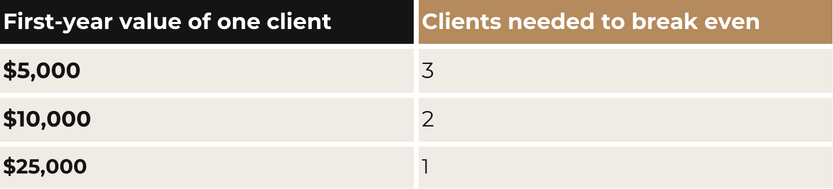
The table doesn't count the 60 clips and 12 blog post drafts you'd otherwise pay for, or the clients who reach out a year later because they've been watching all along.
If you'd rather test the format first, a single Authority Session costs $749. It includes a one-hour session in our Del Rey studio, a full episode edit, three social clips, and an article draft, all delivered within five business days.
Which metrics show podcast success before the revenue arrives?
Revenue is the last number to move, so track the earlier signs of podcast success in the first few months:
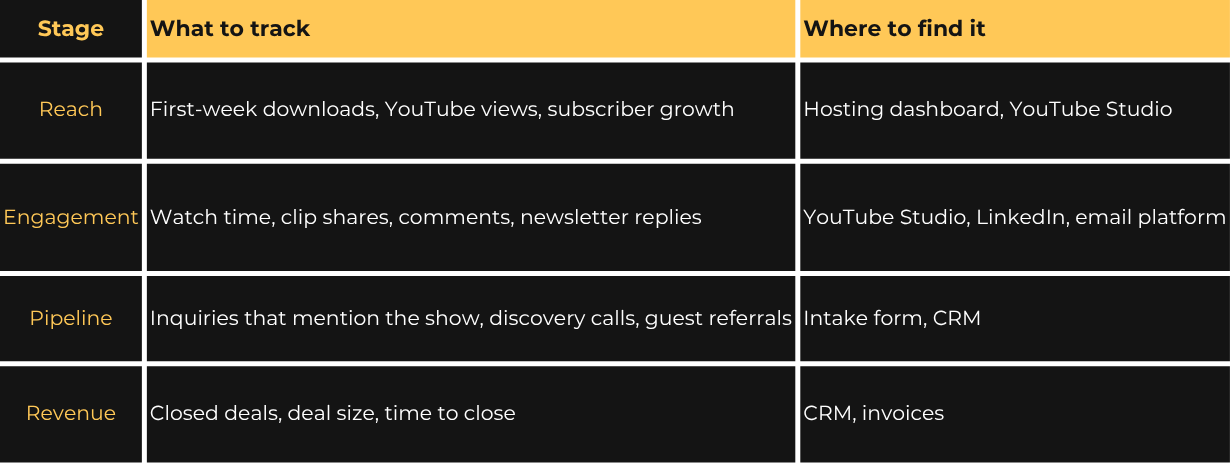
Some of the most valuable activity won't appear in any dashboard. Edelman and LinkedIn found that 89% of B2B decision-makers who shared thought leadership did it through private channels like email, direct messages, and meetings. As Edelman's Annie Dunleavy wrote, "The true measure of thought leadership isn't just what a company says." It's what people do with your ideas, and much of that happens out of sight. So ask new clients what they watched. Their answers are often your best data.
How long does a business podcast take to pay off?
Give it at least 90 days before you judge reach and engagement, and closer to a year before you judge revenue. Buying decisions take time, and a podcast builds trust over many episodes. Each new episode adds to a library prospects can watch before they ever contact you.
Frequently asked questions
How do you make money from a podcast as a beginner?
Start with the sources that don't need a big audience. For a business owner, that means using the show to win clients, build referral partnerships with guests, and create content for your other channels. Advertising and sponsorships can come later, if at all.
How many downloads do you need to get sponsors?
There's no fixed number, and each sponsor or network sets its own minimum. Because rates are usually tied to downloads, a show needs a steady, sizable audience before sponsorship income adds up. For context, an episode needs 425 first-week downloads to reach Buzzsprout's top 10%.
Can a video podcast make money on YouTube?
Yes, through the YouTube Partner Program, but the bar for ad revenue is high. New channels currently need 1,000 subscribers plus 4,000 watch hours in 12 months, and YouTube is doubling the watch-hour requirement to 8,000 for new applicants from February 1, 2027. For most business owners, YouTube is more valuable as the place prospects find and get to know you.
Is a podcast worth it if my audience is small?
Yes, if the audience is the right one. When your services are worth thousands of dollars, a few new clients a year from a few hundred engaged viewers can deliver a strong return.
Measure what your podcast is actually for
Your show's job is to bring in clients, make sales conversations easier, and create content you'd otherwise pay for. Pick one goal, track it from the first episode, and run the numbers after 90 days.
If you're recording in the Los Angeles area, schedule a call with Venice Podcast Studio. We'll help you plan a show built around your business goals and map out what it takes to pay for itself.